

The highlighted shelf bins and floating arrows aren’t the most bizarre features when you first enter a contemporary distribution center wearing AR smart glasses. After ten minutes or so, it’s how commonplace everything seems.
Nothing changes, including the hum of the warehouse, the sound of forklifts reversing, and the smell of cardboard dust. The employee’s gaze shifts. Eyes remain open. Hands remain free. Additionally, a tiny green box on the periphery of their vision indicates which pallet they should proceed to next.
| Information | Details |
|---|---|
| Topic | Augmented Reality in Enterprise Warehousing |
| Industry | Logistics, Supply Chain & Smart Manufacturing |
| Core Technology | AR Smart Glasses, Spatial Computing, Vision Picking |
| Key Platforms | Microsoft HoloLens 2, Magic Leap 2, RealWear Navigator |
| Notable Software | TeamViewer Frontline, SAP EWM, Unity, Vuforia |
| Reported Efficiency Gain | Up to 25% reduction in picking time at Mexican wholesaler Nadro |
| Market Size (2023, GlobalData) | Approx. $54 million for wearable tech in logistics |
| Forecast Window | AR Smart Glasses Shipments for Logistics, 2024–2030 |
| Common Use Cases | Order fulfillment, putaway, cycle counting, kitting |
| Integration Layer | Warehouse Management Systems (WMS), IoT, Digital Twins |
| Standards Maturing | OpenXR, WebXR for cross-platform AR delivery |
| Workforce Impact | Hands-free operations, reduced training time, fewer picking errors |
| Status in 2026 | Moved from pilot phase to fully integrated enterprise systems |
Augmented reality was marketed as a consumer fantasy for many years. Virtual furniture in your living room, Snapchat filters, and that fleeting and somewhat awkward Pokémon Go summer. No one outside of a tech demo really wanted to wear the headsets that the serious money, the money from the boardroom, kept pursuing. Meanwhile, something more subdued was taking place in the industrial belt outside of Guadalajara, Memphis, and Rotterdam. Almost no one outside the logistics trade press was aware that warehouses were evolving into the ultimate tech laboratory.
Walking through these facilities in 2026 gives me the impression that AR has finally found its purpose. Not amusement. Not on social media. Just assisting a weary employee during the seventh hour of a shift in selecting the right SKU from the right bin without squinting at a portable scanner.
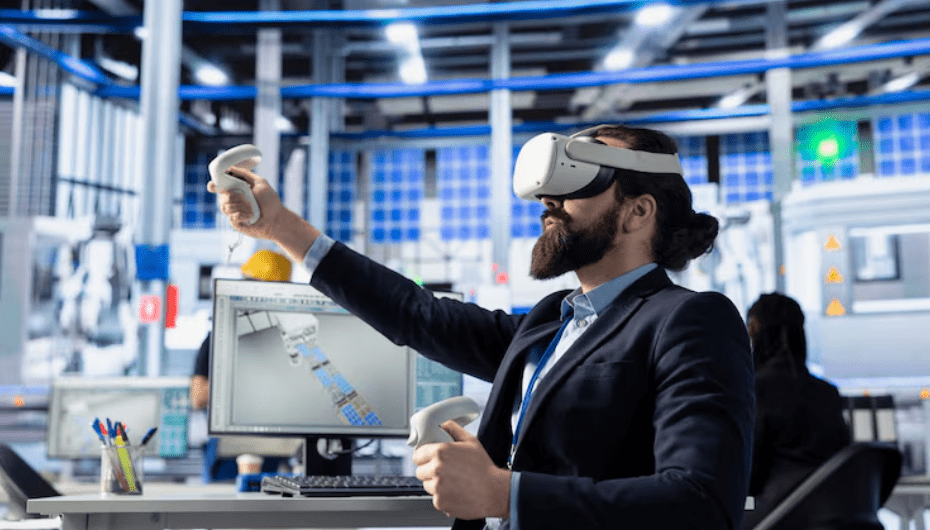
After implementing vision picking using TeamViewer Frontline and SAP’s warehouse software, Mexican pharmaceutical wholesaler Nadro reported a 25% reduction in picking time. Anyone who has managed a fulfillment operation understands what 25% means during peak season, even though it’s not an eye-catching figure for a keynote stage.
The use cases continue to grow in ways that are both subtly revolutionary and strangely ordinary. Receiving inventory, putaway, cycle counting, kitting, and production line delivery are all minor grinding inefficiencies that AR appears to mitigate. The storage location is now superimposed on the floor when workers enter a receiving zone, resembling a waypoint in a video game. The first time, it looks ridiculous. It just seems like work by day three.
It’s interesting to note how warehouse operators’ conversations have changed. The question of whether to invest in AR at all was raised two or three years ago. These days, the focus is on scale, device-neutral tactics, and whether smart glasses can communicate with IoT sensors, the WMS, and the digital twin displayed on a manager’s office screen. The wearable technology market in healthcare, retail, and logistics is expected to reach approximately $54 million by 2023, according to GlobalData. modest in terms of technology. However, real industrial shifts tend to grow in an unglamorous manner.
The similarities to past industrial moments are difficult to ignore. In the 1980s, barcode scanners felt revolutionary before going unnoticed. Robots from the warehouse made a loud entrance before fading into the background. AR appears to be moving more quickly along the same arc. There is a genuine reluctance in the workplace. It takes time to train. Some employees adore the glasses. Some find them cumbersome, uncomfortable after a full shift, and somewhat dystopian if you consider being guided by a floating instruction layer for an extended period of time.
It’s still unclear if augmented reality (AR) will continue to be the primary interface or if it will become one tool among many, alongside collaborative robots, AI vision systems, and whatever Apple’s next industrial pivot looks like. It appears that this technology ceased to be a demo in the warehouse, of all places. It turned into a job. A dull, practical, and somewhat futuristic job. Perhaps that was always the intention.
