

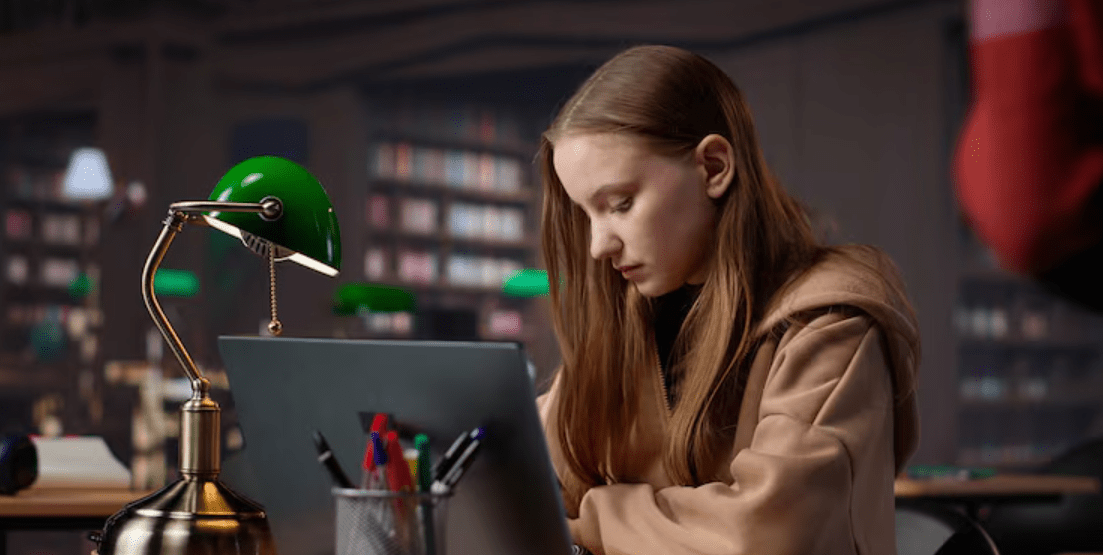
Nearly every university library at midnight will have at least one graduate student bent over a laptop with a partially completed paragraph on the screen and a chatbot window open in the next tab. It is rarely discussed aloud.
However, it is present in almost every field, from literary theory to molecular biology, humming softly in the background. The topic of whether scientists are utilizing AI to assist with their paper writing is no longer relevant. What is now considered to be theirs is the question.
| Topic Profile: AI in Scientific Research | Details |
|---|---|
| Field | Scientific publishing, computational research, academic ethics |
| First high-profile incident | A 2023 paper briefly listed ChatGPT as a co-author (Salvagno et al.) |
| Key tools currently in use | ChatGPT, Gemini 2.0, iThenticate, OpenAI text classifiers |
| Notable system | Google’s AI co-scientist, built on Gemini 2.0 |
| Purpose | Hypothesis generation, literature synthesis, language polishing |
| Major concern | Plagiarism, fabricated citations, loss of critical thinking in early-career researchers |
| Publisher policies | Disclosure required; AI cannot be listed as an author |
| Detection methods | Plagiarism software, AI-text classifiers, human review |
| Beneficiaries | Non-native English speakers, neurodiverse researchers, interdisciplinary teams |
| Status as of 2026 | Widely used, unevenly disclosed, still controversial |
When ChatGPT’s name appeared on a peer-reviewed publication a few years ago, editorial circles were almost alarmed. In response, Elsevier issued a policy that, looking back, seems like a cautious compromise: generative AI may improve language, but it cannot be an author, and any use must be declared. They were followed by other publishers. On paper, the regulations made logical. However, enforcing them has proven to be far more difficult than anyone acknowledged at the time.
Speaking with editors gives me the impression that the fear has subsided into something more unsettling. There are tools for detection. AI flagging has been included into iThenticate’s plagiarism program. Years ago, OpenAI discreetly withdrew its own classifier due to its inadequate accuracy. In the same way that customs agents squint at passports, editors now squint at suspiciously fluid prose, searching for the subtle clue, the line that seems put together rather than written. They occasionally locate it. They frequently don’t.

The following phase, which fewer people anticipated, followed. Based on Gemini 2.0, Google’s AI co-scientist does more than just improve grammar. It produces theories. It suggests experiments. Until something that resembles a research direction emerges, it operates a tiny parliament of specialized agents, one for idea generation, one for critique, one for ranking, and one for refinement. Research from Imperial College and Stanford has previously been published. The system is acknowledged in the articles. Naturally, the question of whether the system comprehended what it generated is a separate one.
The similarities to prior tools are difficult to ignore. Spelling was not destroyed by Spellcheck. Statisticians were not eliminated by statistical software. One coworker who speaks French talked about using Google Translate to compose professional letters in a language he could converse in but not write effectively. Every phrase was still his. He simply arrived more quickly. Large language models are often described by researchers as a translator from rough ideas to understandable English, especially for the vast number of scientists who write in second or third languages.
There is merit to that argument. Global science has a well-established and extremely costly prejudice against writers who are not native English speakers. The cost of editing services might reach the thousands of dollars. Prose papers are rejected, not scientific ones. The advantage is genuine if an algorithm can reduce that barrier.
But now something feels different. A text that has been clarified is not exactly the same as a hypothesis produced by a model trained on the whole internet. Theoretically, the researcher is still responsible. In reality, the further a person deviates from the initial concept, the less accountability there is. Reviewers report seeing references that are miscontextualized so that it appears no one actually read them, citations that don’t exist, and methods sections that describe processes the authors never carried out.
It’s genuinely unclear what will happen next. Perhaps the journals adjust in the same way that they have to digital figures and more data. Perhaps a more subdued, two-tier structure develops, in which certain labs differentiate themselves by refusing to use machines, while others strongly rely on them. The question of whether an algorithm can share a prize has not yet been decided by the Nobel committee. That discussion will likely occur before the field is prepared for it.
